
Small bathrooms are not unusual in New England homes.
In fact, they are expected.
Many houses across Massachusetts were built at a time when bathrooms were designed to be practical, not spacious. The footprint is limited. The layout is often fixed. And over time, what once felt sufficient starts to feel restrictive.
That is usually when homeowners begin looking for small bathroom remodel ideas that can improve comfort without expanding the space.
Because in most cases, the goal is not to make the bathroom bigger. It is to make it work better.
When Space Feels Smaller Than It Is
A small bathroom does not always mean a small room.
Sometimes it just means the layout is not being used efficiently.
A bulky vanity takes up too much room. A tub that rarely gets used dominates the floor plan. Storage is scattered instead of integrated.
These details add up.
The room starts to feel tighter, even if the square footage has not changed.
That is why many compact bathroom renovation MA projects begin with a simple question. Not “How do we add space?” but “How do we use the space we already have?”
Replacing the Tub to Open the Room
One of the most noticeable changes in smaller bathrooms comes from rethinking the tub.
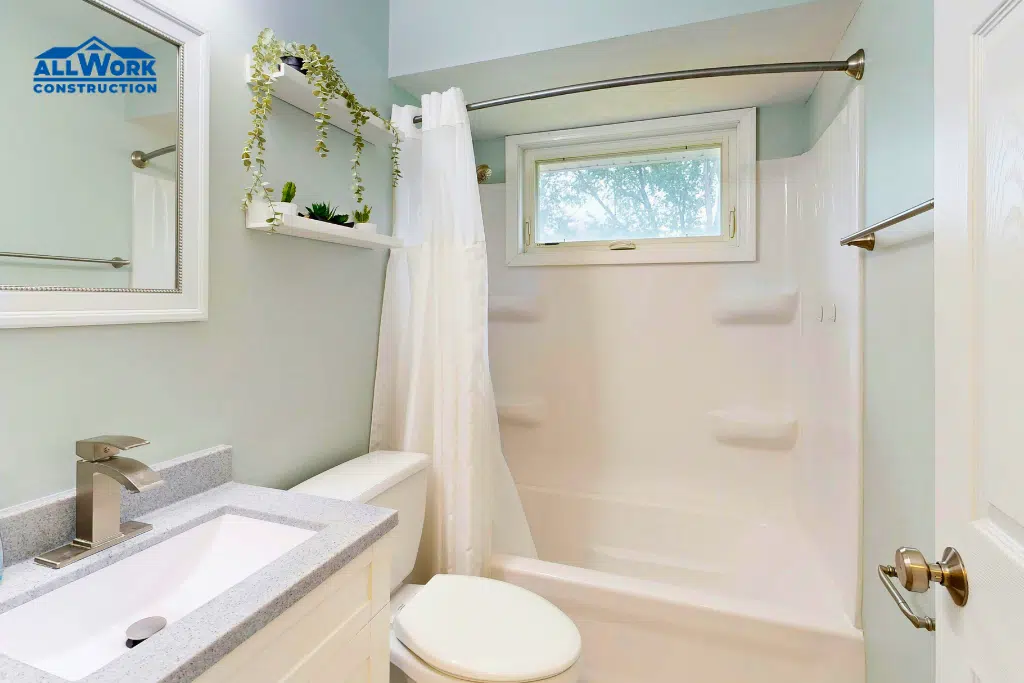
Traditional tub-shower combinations are common in older homes. They serve a purpose, but they also take up valuable space.
Switching to a walk-in shower can immediately change how the room feels.
It does not physically increase square footage, but it creates openness. Glass panels allow light to move through the space. The floor becomes more visible. Movement becomes easier.
For many homeowners, this is the first step toward a more functional layout.
Choosing the Right Vanity Size
Vanities often create more limitations than expected.
In small bathrooms, oversized cabinets can crowd the room and reduce usable space. At the same time, going too small can create storage problems.
The balance matters.
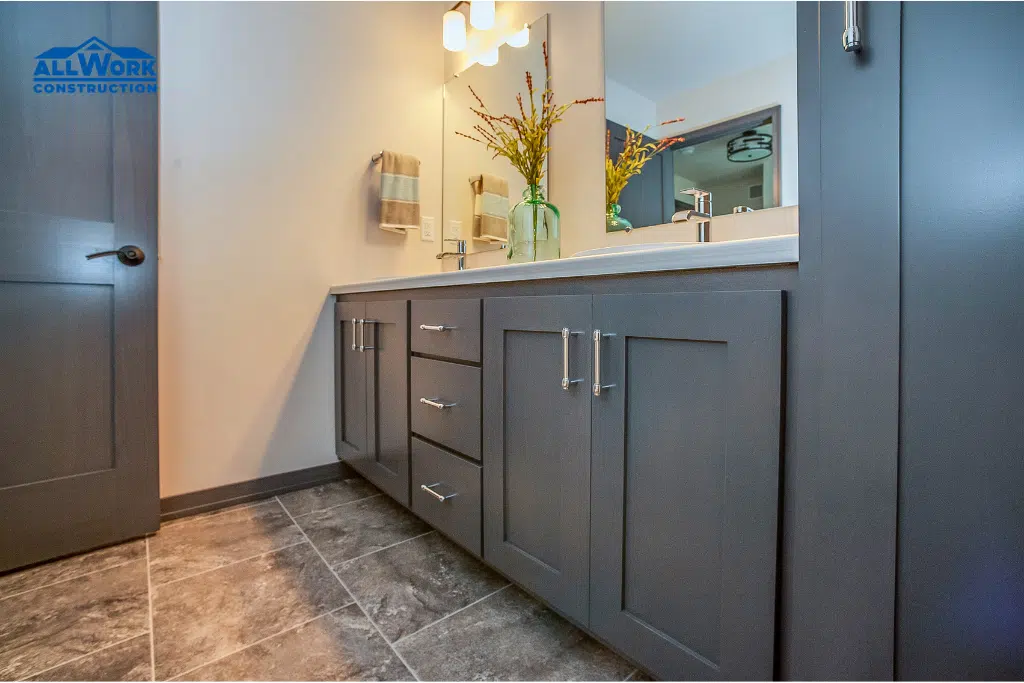
Floating vanities are a popular option because they free up floor space visually. Even though the difference is minimal in measurement, it can make the room feel less heavy.
Deeper drawers instead of traditional cabinets also improve organization without taking up additional room.
These kinds of choices are common in thoughtful small bathroom remodel ideas, where every inch needs to serve a purpose.
Using Vertical Space More Effectively
When floor space is limited, walls become more important.
Many older bathrooms do not fully use vertical space. Storage is kept low, leaving walls underutilized.
Adding storage upward changes that.
- Tall, narrow cabinets
- Open shelving above the toilet
- Recessed niches inside shower walls
These additions do not require expanding the room, but they significantly improve how it functions.
The key is to keep everything integrated so the space does not feel cluttered.
Light and Color Play a Bigger Role Than Expected
Lighting is often underestimated in smaller bathrooms.
A single overhead light can make the room feel flat or dim, even if it is technically bright enough.
Layered lighting works better.
Adding lights near mirrors, using softer tones, and reducing harsh shadows can make the space feel more open.
Color also plays a role, but not in the way people sometimes expect.
It is less about choosing white and more about consistency. Keeping tones aligned, avoiding heavy contrast, and allowing light to move freely through the space tends to create a more comfortable environment.
Rethinking Doors and Movement
In tight layouts, even small details like door placement matter.
A traditional swinging door can take up valuable space, especially in a compact bathroom. Changing the direction of the swing or using a sliding option can improve movement without altering the structure.
These adjustments are subtle, but they affect how the room feels every time it is used.
Storage That Does Not Feel Like Storage
One of the challenges in small bathrooms is adding storage without making the room feel crowded.
That is where built-in solutions make a difference.
Instead of adding shelves or cabinets after the fact, storage is designed as part of the layout.
It becomes less visible but more effective.
This approach is often seen in compact bathroom renovation MA projects, where the goal is to reduce clutter without reducing functionality.
Keeping the Design Simple
In smaller spaces, simplicity usually works better than complexity.
Too many materials, textures, or features can make the room feel busy. Even if each element looks good on its own, the overall result can feel overwhelming.
A more restrained approach tends to work better.
Fewer materials. Cleaner lines. Thoughtful placement of key elements.
This does not mean the bathroom has to feel plain. It just means every detail has a purpose.
A Space That Feels Easier to Use
The best small bathroom remodels do not necessarily look dramatic.
They feel different.
Movement becomes easier. Storage makes sense. Lighting supports daily routines. Nothing feels in the way.
And even though the room is still small, it no longer feels limited.
That is usually the real goal behind most small bathroom remodel ideas in New England homes. Not to change the size of the space, but to change how it works.