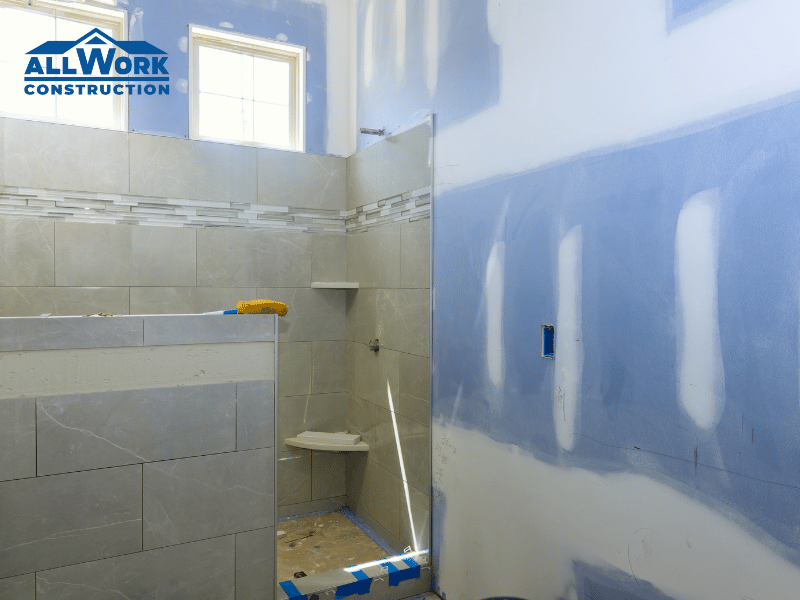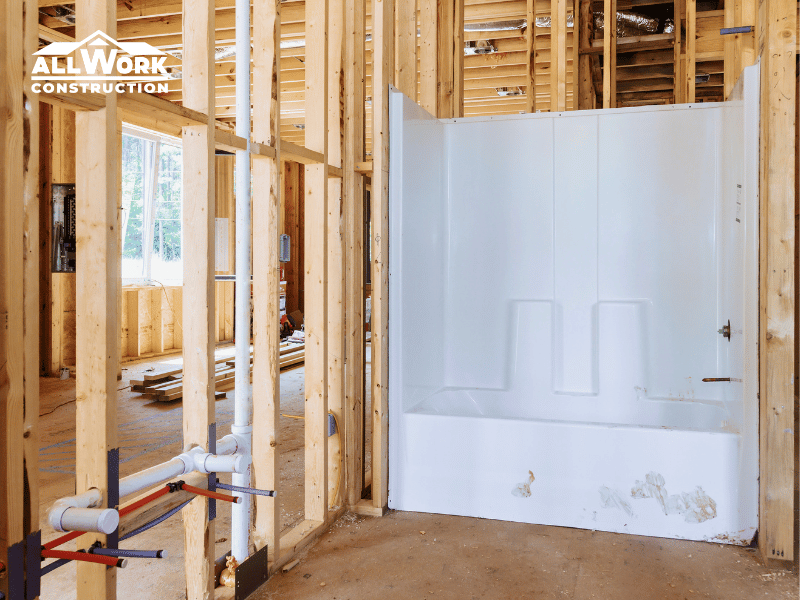

A bathroom can have excellent tile, a properly built shower, quality cabinetry, and new plumbing fixtures while still developing moisture problems because of something far less visible: the way humid air leaves the room.
Every hot shower releases water vapor. Some of it condenses immediately on mirrors and glass, but moisture also reaches painted walls, ceilings, window surfaces, trim, cabinetry, and other materials. If the bathroom dries reasonably quickly, this is part of normal use. When humidity remains trapped for long periods, the room experiences a very different environment.
In Massachusetts and New Hampshire, bathroom ventilation deserves particular attention because homeowners cannot depend on opening a window throughout the year. During a New England winter, the bathroom may be producing warm, humid air while exterior surfaces are extremely cold. That temperature difference can make condensation much easier to notice, especially around windows and other colder areas.
The solution is not simply to install the largest bathroom exhaust fan available.
Effective bathroom ventilation depends on the fan, ductwork, exterior termination, air movement, controls, and the conditions of the room itself. When those pieces work together, the bathroom can manage everyday moisture far more effectively.
What Actually Happens to Bathroom Humidity After a Shower?
A hot shower adds moisture to the air faster than most homeowners realize.
You can see part of the effect immediately. The mirror fogs, glass becomes wet, and sometimes condensation appears on the window. What is less obvious is the moisture interacting with surfaces throughout the bathroom.
The U.S. Environmental Protection Agency recommends controlling indoor moisture and using exhaust fans that vent outdoors in bathrooms because moisture control is fundamental to reducing mold growth. The EPA generally recommends keeping indoor relative humidity below 60 percent, ideally between 30 and 50 percent when practical.
That does not mean a bathroom can never temporarily exceed those levels while someone showers. Bathrooms experience short periods of high humidity by design.
The more useful question is what happens afterward.
Does the room begin drying promptly, or does the mirror remain wet and the air feel humid long after the shower has ended?
That difference can reveal much more about ventilation performance than the presence of steam during the shower itself.
A Bathroom Exhaust Fan Is Only One Part of the System
When homeowners experience bathroom humidity problems, the exhaust fan usually receives the blame.
Sometimes correctly.
An old fan may move very little air, make excessive noise, or no longer perform as intended. But replacing the visible fan without investigating the rest of the system can leave the underlying problem unchanged.
Think of bathroom ventilation as a path:
Bathroom → exhaust fan → duct → exterior termination
The entire path needs to work.
Fan capacity needs to match the bathroom
Bathroom exhaust fans are rated according to how much air they can move, commonly expressed in cubic feet per minute, or CFM.
A fan that is undersized for the room may struggle to remove moisture efficiently. Simply choosing an extremely powerful model is not necessarily better, because actual performance also depends on the duct system and the broader ventilation conditions of the home.
The Home Ventilating Institute provides sizing guidance for bathroom ventilation, including different recommendations based on bathroom size and fixtures. For bathrooms up to 100 square feet, HVI recommends approximately 1 CFM per square foot, with a minimum ventilation level for smaller bathrooms. Larger bathrooms can require calculations based on individual fixtures.
That provides a useful starting point, but sizing alone does not guarantee performance.
The advertised CFM is not necessarily what reaches the outdoors
A fan has to move air through resistance.
Long duct runs, multiple bends, inappropriate duct dimensions, restrictions, and other installation conditions can reduce actual airflow.
This explains a situation contractors encounter regularly: the homeowner has a relatively new exhaust fan, yet the bathroom still takes too long to dry.
The fan itself may not be the primary problem.
Before installing another model, the duct system deserves attention.
Where Does Your Bathroom Fan Actually Vent?
This is one of the most important questions to answer in an older bathroom.
Humid bathroom air should be exhausted outdoors, not released into an attic, wall cavity, or another enclosed portion of the building. ENERGY STAR guidance for bathroom exhaust fans likewise specifies that fans should be ducted to exhaust outdoors.
Why does this matter?
Because moving moisture out of the bathroom but depositing it somewhere else inside the house does not solve the moisture-management problem.
It relocates it.
During professional bathroom remodeling, particularly in an older Massachusetts or New Hampshire home, evaluating an existing exhaust route can therefore be just as important as replacing the fan itself.
Older renovations can hide questionable ventilation routes
New England housing has accumulated generations of remodeling.
A bathroom in a 1920s Massachusetts house may have been renovated in the 1960s, updated again in the 1990s, and partially modernized more recently. The exhaust fan visible today does not necessarily tell you when or how the duct behind it was installed.
The same issue can appear in mid-century and later homes.
If the bathroom has persistent moisture problems, a renovation creates an opportunity to investigate accessible parts of the ventilation system instead of automatically reconnecting a new fan to an unknown existing configuration.
That is one reason older New England bathrooms require a different remodeling approach from projects where the construction history is well documented.
Why New England Winters Make Bathroom Condensation More Noticeable
Humidity is only part of the condensation equation.
Surface temperature matters too.
Warm bathroom air can hold considerable moisture. When that air reaches a sufficiently cold surface, its temperature drops and water vapor can condense.
This is why bathroom windows often provide the first visible warning.
The window may be showing the problem rather than causing it
Imagine taking a hot shower on a January morning in New Hampshire.
The bathroom air is warm and humid. The interior surface of the window is much colder than the mirror or an interior partition wall. Condensation therefore becomes particularly visible on the glass.
A homeowner may conclude that the window is defective.
Sometimes a window problem does contribute to unusually cold surfaces or air leakage, and deteriorated windows deserve evaluation. But condensation can also indicate that the bathroom is producing more moisture than the ventilation system is removing effectively.
Replacing the window without addressing excessive bathroom humidity may not solve the entire problem.
Likewise, installing a stronger fan does not automatically correct a poorly performing window.
The room needs to be evaluated as a system.
Exterior walls deserve attention during remodeling
Cold exterior surfaces can become more relevant when a bathroom is renovated.
If an exterior wall is opened during construction, accessible insulation, air leakage conditions, and evidence of previous moisture exposure may become visible. Changes should be appropriate for the particular wall assembly rather than based on a generic recommendation.
This matters especially in older Massachusetts and New Hampshire homes, where wall construction can vary considerably by age and previous renovations.
How Long Should a Bathroom Fan Run After a Shower?
Turning the fan off when the shower ends is a common habit.
Unfortunately, visible steam disappearing does not mean the bathroom is dry.
Moisture remains on shower walls, glass, grout joints, towels, ceilings, and other surfaces after someone leaves the room. Continuing ventilation helps remove moisture as those surfaces dry.
Rather than relying on someone to remember to return later and switch the fan off, bathroom remodeling provides an opportunity to consider better controls.
Timer switches solve a simple human problem
A timer allows the homeowner to select an operating period and leave the bathroom.
The fan continues working without being forgotten for the entire day.
This is a relatively simple improvement, but it addresses one of the weaknesses of manual ventilation: actual performance depends on user behavior.
Humidity-sensing controls are another option. Depending on the product and installation, they can activate or extend ventilation in response to elevated humidity.
Neither feature compensates for a poor fan or duct system.
They make a properly designed system easier to use consistently.
Why a Quiet Fan Can Be More Effective Than a Powerful Fan Nobody Uses
Fan specifications often focus on airflow.
Noise deserves almost as much attention.
A bathroom exhaust fan that sounds unpleasant may technically have adequate capacity, but homeowners often switch noisy fans off as quickly as possible.
That reduces their real-world effectiveness.
Bathroom fan noise is commonly rated in sones. Lower ratings generally indicate quieter operation.
For a frequently used primary bathroom, choosing a fan that balances appropriate airflow with comfortable noise levels can improve how consistently the ventilation system is actually used.
This is a good example of the difference between designing for specifications and designing for people.
A ventilation system only performs its intended function when household behavior allows it to.
Can Poor Ventilation Cause Mold in a Bathroom?
Mold needs moisture, and recurring excessive moisture can create conditions that support growth.
However, homeowners should be careful about diagnosing every dark mark around bathroom caulk as proof that the exhaust fan is inadequate.
Moisture can come from several sources.
A shower could have a leak. Plumbing inside the wall may be involved. Water may be escaping around an enclosure. Condensation could be forming on a particularly cold surface.
Poor ventilation is one possibility, but it is not the only one.
Recurring moisture deserves investigation
If mildew or mold-like discoloration repeatedly returns after cleaning, the useful question is not simply which cleaning product will remove it again.
Ask why the area keeps staying wet long enough for the problem to return.
Persistent peeling paint, swollen trim, deteriorating materials, recurring condensation, or musty odors can also justify closer investigation.
During a bathroom renovation, those clues should be documented before demolition.
Once walls and finishes are removed, the contractor may gain access to information that helps distinguish ventilation problems from leaks or other moisture sources.
Don’t Confuse Waterproofing With Ventilation
These systems solve different problems.
Waterproofing protects vulnerable construction in wet areas from liquid water associated with showers and bathing.
Ventilation manages moisture in the air.
A bathroom needs both where applicable.
A beautifully waterproofed shower does not prevent the mirror, ceiling, or window from experiencing excessive condensation if humid air remains trapped in the room.
Likewise, an excellent exhaust fan cannot compensate for a shower assembly that allows water to reach materials that should remain protected.
This distinction matters because homeowners sometimes spend heavily on the visible shower while treating ventilation as a minor accessory.
In a New England bathroom that may be used several times every day, ventilation belongs in the construction plan rather than on a last-minute fixture list.
Is Opening a Window Enough?
During pleasant weather, opening a bathroom window can certainly help exchange air.
It should not be the only moisture-management strategy for a bathroom that requires reliable year-round ventilation.
A Massachusetts homeowner is unlikely to open the bathroom window after a shower when outdoor temperatures are well below freezing. The same applies throughout much of a New Hampshire winter.
There are also days when outdoor humidity conditions make natural ventilation less useful.
Mechanical exhaust provides a more consistent method for removing moisture directly from the room.
The window can be a bonus.
It should not have to do the exhaust fan’s job.
Why Some Bathrooms Stay Humid Even With a Good Fan
Suppose the fan is appropriately sized, the duct terminates outdoors, and the equipment appears to work correctly.
The bathroom can still have weak exhaust performance if replacement air cannot enter the room easily enough.
When the fan removes air, other air has to replace it.
A very tightly closed bathroom can restrict that movement. Door undercuts, transfer pathways, and the overall ventilation design of the house can influence performance.
This is particularly relevant as older New England houses receive energy-efficiency improvements that reduce uncontrolled air leakage.
Making a house tighter can be beneficial, but intentional ventilation becomes increasingly important as uncontrolled air movement decreases.
A contractor investigating bathroom humidity should therefore avoid treating the fan as an isolated appliance.
Common Ventilation Mistakes During Bathroom Remodeling
A renovation is the ideal time to correct ventilation, yet several mistakes can survive even a high-quality cosmetic remodel.
Replacing the fan but reusing a problematic duct
A new fan is installed in the existing ceiling opening and connected to whatever is already there.
If the old duct arrangement was the reason for poor performance, little has been accomplished.
Selecting equipment only by CFM
Airflow capacity matters, but duct configuration, noise, controls, room conditions, and installation quality affect the final result.
The biggest number on the box is not automatically the best choice.
Deciding on ventilation after the ceiling is finished
Fan location, duct routing, electrical requirements, and controls should be coordinated before surfaces are closed.
Late planning limits options.
Treating condensation as purely cosmetic
Repeatedly repainting a peeling ceiling or replacing deteriorated caulk addresses the visible result.
If excessive moisture is causing the problem, it will likely return until the source is corrected.
What Should Be Checked During a Full Bathroom Renovation?
When the room is already being substantially rebuilt, homeowners have a valuable opportunity to evaluate the ventilation system more thoroughly.
The contractor can consider the bathroom size and layout, existing fan, accessible ductwork, exterior termination, controls, window conditions, and known history of moisture problems.
If walls or ceilings are open, previously hidden conditions may also become visible.
This does not mean every bathroom needs a completely new ventilation system.
The existing setup may be perfectly suitable.
The advantage of evaluating it during remodeling is that problems can be addressed while access is relatively easy instead of after new tile, paint, and ceilings have been completed.
All Work Construction’s approach to moisture management
For All Work Construction, ventilation is part of planning the bathroom as a complete room rather than treating the exhaust fan as an isolated product.
That is particularly important across Massachusetts and New Hampshire, where winter conditions, older housing, previous renovations, and varying wall assemblies can influence how moisture behaves in a bathroom.
If a homeowner reports persistent condensation or humidity during the initial consultation, that information deserves attention before the existing room disappears during demolition.
Sometimes the solution is relatively straightforward. Another project may require investigation of the exhaust route, window conditions, or another potential moisture source.
The objective is to understand why the bathroom is struggling to dry instead of simply replacing visible finishes and hoping the problem disappears.
A Simple Test: What Does Your Bathroom Look Like 20 Minutes Later?
Homeowners do not need specialized equipment to notice the first signs of a ventilation problem.
Pay attention to the bathroom after normal use.
Does heavy condensation remain on several surfaces long after the shower? Are painted walls or ceilings routinely wet? Does the room stay noticeably humid compared with the rest of the house? Does a musty smell linger?
None of these observations provides a complete diagnosis.
Together, however, they can tell a contractor where to begin looking.
For homeowners planning bathroom remodeling in Massachusetts or New Hampshire, mentioning these symptoms during the first consultation is far more useful than waiting until the new bathroom has been built.
A Dry Bathroom Is Part of a Durable Bathroom
Bathroom ventilation is easy to underestimate because most of the system disappears into the ceiling.
Homeowners see the grille. They do not see the airflow moving through the duct or the moisture leaving the house.
Yet the effects of poor moisture management can eventually become very visible.
Recurring condensation, peeling finishes, persistent mildew, deteriorating materials, and an uncomfortable humid room can undermine an otherwise excellent renovation.
The solution is not simply a bigger exhaust fan.
Good bathroom ventilation comes from matching appropriate equipment to the room, providing an effective route outdoors, using practical controls, considering replacement air, and investigating other moisture sources when symptoms persist.
For Massachusetts and New Hampshire homes, that system becomes especially important when winter closes the window and the bathroom still needs to dry properly after every shower.
A successful remodel should not only look good when construction is finished. It should also be designed to manage the moisture produced during thousands of ordinary mornings that follow.