
A bathroom remodel is exciting when you picture the finished result. The old shower is gone, the lighting finally works properly, storage makes sense, and the room feels cleaner, brighter, and easier to use.
The construction phase is usually less glamorous.
There will be noise, dust, deliveries, unfamiliar people moving through the house, and at least some disruption to the family’s normal routine. If the bathroom being remodeled is the only full bathroom in the home, even a well-organized project can require careful coordination.
That does not mean the renovation has to take over the entire house.
Most of the stress homeowners associate with remodeling comes from uncertainty rather than construction itself. When the schedule is clear, materials are ready, access routes are planned, and the family knows what to expect, the project becomes much easier to manage.
At All Work Construction, we have found that homeowners enjoy a smoother remodeling experience when practical household planning begins at the same time as design planning. Choosing tile and fixtures matters, but deciding how the home will function during construction is just as important.
Understand Exactly What the Project Involves
Not every bathroom remodel creates the same level of disruption.
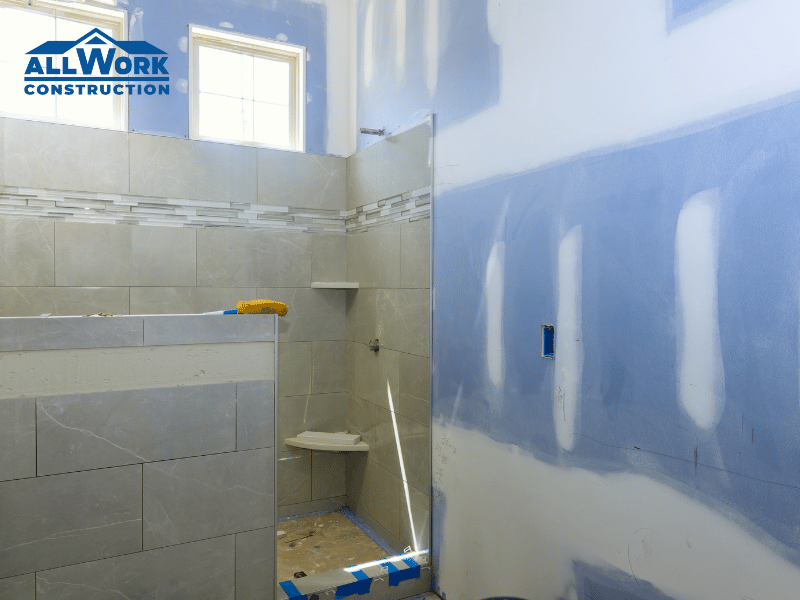
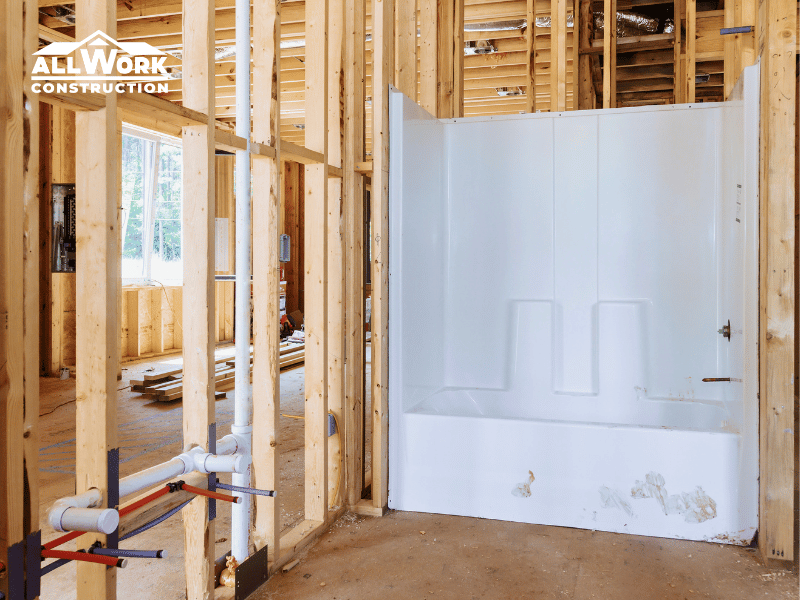
A straightforward replacement project may involve removing the existing vanity, flooring, and shower while keeping most plumbing fixtures in their original locations. A full renovation can include demolition to the framing, plumbing relocation, electrical upgrades, ventilation work, subfloor repairs, waterproofing, tile installation, cabinetry, painting, and final fixture installation.
Those projects require very different schedules.
Before construction begins, ask the contractor to explain the major phases of work in plain language. Homeowners should understand when demolition will happen, how long plumbing and electrical work may take, when inspections are expected, and which parts of the schedule depend on materials or subcontractors.
A timeline will always include some flexibility, especially in older New England homes where hidden conditions may not be visible until demolition begins. Even so, understanding the sequence of work makes it easier to plan family routines around the busiest days.
Decide How Your Household Will Handle Bathroom Access
If the home has another full bathroom, the temporary adjustment may be relatively simple. Families can relocate toiletries, towels, and daily routines before construction begins.
A one-bathroom home requires more planning.
Some projects allow the toilet or sink to remain available during parts of construction, but homeowners should never assume that will be possible. Plumbing may need to be disconnected for extended periods, and waterproofing, flooring, or fixture installation can temporarily make the room completely unusable.
Discuss bathroom access before signing the contract. Ask which fixtures will be unavailable, how long those interruptions are likely to last, and whether there are any periods when water must be shut off to other parts of the house.
Homeowners planning bathroom remodel in Reading, MA, may also want to consider whether nearby relatives, neighbors, or short-term accommodations can provide a backup during the most disruptive phase. Arranging that option in advance is far less stressful than trying to solve the problem after demolition has started.
Create a Temporary Getting-Ready Station
Daily routines become much easier when essential items are moved before the work begins.
Choose a bedroom, laundry room, or another bathroom as a temporary grooming area. Set up a mirror, lighting, electrical access, towels, medications, and the personal care products used every day.
Avoid moving the entire contents of the old bathroom into the temporary space. Most households use only a fraction of what is stored in their cabinets. Separate daily essentials from extra products, backup supplies, and items that can remain boxed until the renovation is complete.
This small amount of organization prevents morning routines from becoming chaotic and keeps personal items away from construction dust.
Plan the Contractor’s Route Through the Home
One of the best ways to keep a renovation contained is to establish a clear access path.
The contractor should know which entrance to use, where tools and materials can be placed, and how workers will reach the bathroom without moving through unnecessary parts of the house. When possible, choose the shortest practical route from an exterior door to the project area.
Protect flooring along that path before work begins. Contractors may install floor protection, plastic barriers, and dust-control systems, but homeowners should still remove fragile furniture, rugs, artwork, and decorative items from nearby areas.
A good contractor will make reasonable efforts to contain dust and clean the work area. However, construction is still construction. Preparing adjacent spaces helps protect belongings and reduces the amount of cleanup required later.
Finalize Materials Before Demolition
Material delays are one of the most common reasons remodeling projects stretch beyond the original schedule.
Tile may be backordered. A vanity can arrive damaged. Custom glass cannot be measured until tile installation is complete. Plumbing fixtures may require specific rough-in components that need to be available before walls are closed.
The smoother approach is to finalize and confirm as many selections as possible before demolition begins. Major items should either be on site or have reliable delivery dates that match the construction schedule.
This is especially important for homeowners planning bathroom remodel in Georgetown, MA, where older homes may require nonstandard sizes or customized solutions. A vanity that looks perfect online may not fit the available wall space, and an unusual shower configuration may require custom glass rather than a standard enclosure.
Accurate measurements and early ordering reduce the risk of the bathroom sitting unfinished while everyone waits for one missing product.
Make Decisions Before the Crew Needs Them
A bathroom renovation includes many small decisions that homeowners may not think about during the initial design stage.
The contractor may need to confirm the height of the shower niche, the placement of towel bars, the direction of the shower door, the location of outlets, or the alignment of tile patterns. Delaying those answers can interrupt the workflow.
Ask for a list of decisions that must be completed before construction and another list of choices that can wait until later. That gives homeowners time to consider important details without forcing workers to stop while waiting for approval.
Changes made during construction are sometimes unavoidable, but unnecessary last-minute revisions can increase labor costs, delay materials, and create confusion.
Prepare for Noise, Dust, and Deliveries
Demolition and tile preparation can be noisy. Cutting materials, removing old flooring, and installing new systems may be difficult to ignore, even when the bathroom is located on another floor.
Families working from home should discuss the expected daily schedule and plan important calls around the loudest phases. Pets may also need a quieter location away from workers, open doors, tools, and unfamiliar sounds.
Material deliveries deserve attention as well. Vanities, tile boxes, shower components, and fixtures require temporary storage. Decide where deliveries can be placed without blocking walkways or exposing products to moisture and damage.
A garage, basement, or protected room may work well, provided the contractor can access the materials when needed.
Keep Children and Pets Away From the Work Area
A remodeling site contains hazards that are not present during normal household life. Tools, sharp materials, exposed wiring, open wall cavities, and construction debris may all be accessible during different phases.
Establish clear boundaries before work begins. Children should understand that the project area and material storage zones are off limits. Pets may need to remain in another part of the home during working hours, especially if contractors are frequently entering and leaving through exterior doors.
This preparation helps the crew work safely and reduces the chance of interruptions or accidents.
Expect Some Uncertainty in Older Homes
Even a carefully planned project can change after demolition.
Older bathrooms may conceal moisture damage, previous repairs, uneven framing, outdated plumbing, or subfloor conditions that need attention before new materials can be installed. These discoveries do not necessarily mean the project was planned poorly. They are part of renovating homes that have changed over many decades.
A realistic budget should include a contingency for unexpected work. Homeowners should also understand how the contractor communicates changes, documents additional costs, and receives approval before proceeding.
Whether the project involves bathroom remodel in Newburyport, MA, or another established New England community, flexibility is easier to manage when everyone agrees on the process before construction begins.
Use Regular Updates Instead of Constant Check-Ins
Homeowners naturally want to know how the project is progressing. At the same time, repeatedly stopping the crew for updates can slow the work and create frustration on both sides.
Establish a communication routine before construction begins. A brief update at the end of the day or a scheduled conversation several times a week may be enough to review progress, upcoming decisions, and any changes to the schedule.
It is also helpful to identify one person in the household who will communicate with the contractor. When several family members provide separate instructions, misunderstandings become more likely.
Clear, consistent communication keeps the project moving while ensuring homeowners remain informed.
Do Not Schedule the Remodel Around an Important Deadline
Homeowners sometimes plan a bathroom remodel immediately before hosting guests, listing the home for sale, or celebrating a major holiday.
That creates unnecessary pressure.
Even well-managed projects can encounter delays caused by inspections, hidden conditions, weather, material problems, or custom fabrication. A schedule should include breathing room rather than depending on everything happening on the earliest possible date.
Work With a Contractor Who Plans the Entire Experience
A successful bathroom remodel involves more than construction quality. It also depends on scheduling, communication, dust control, material coordination, and respect for the rest of the home.
During the consultation, ask how the company manages occupied homes. Find out how work areas are protected, how debris is removed, when the crew arrives, and how homeowners receive updates.
At All Work Construction, project planning includes both the finished bathroom and the experience of getting there. The goal is to complete quality work while minimizing unnecessary disruption to the household.
Homeowners considering a bathroom remodel in Boxford, MA, or surrounding communities should look for a remodeling partner who can explain not only what will be built but also how the project will be managed from the first day through the final walkthrough.
Final Thoughts
A bathroom remodel will always create some temporary inconvenience. The room must be taken apart before it can be rebuilt, and normal routines will need to change for a while.
However, the project does not have to make the entire house feel like a construction site.
A clear schedule, early material selections, a temporary bathroom plan, protected access routes, realistic expectations, and regular communication all help keep the disruption under control.
The families who manage remodeling most comfortably are usually not the ones whose projects encounter no surprises. They are the ones who prepared for the process, understood the sequence of work, and chose a contractor capable of managing both construction and communication.
With thoughtful planning, homeowners can get through the renovation without feeling that daily life has been placed on hold. The temporary inconvenience becomes much easier to accept when every week brings the home closer to a bathroom that will work better for many years.