
Small bathroom remodeling in older New England homes rarely feels small in a simple way.
They feel restrictive.
Everything technically fits inside the room, but using it doesn’t feel natural. You turn sideways to move around. Storage ends up scattered. Even basic routines take more effort than they should.
That’s usually when homeowners realize the problem isn’t size.
It’s a layout.
And that changes how remodeling should be approached.
Why Older Bathrooms Don’t Match Modern Use
Most of these bathrooms were designed decades ago, when expectations were different.
There were fewer products, simpler routines, and less need for storage. Layout decisions were often based on plumbing convenience rather than long-term usability.
Over time, the way people use bathrooms changed.
The space didn’t.
That’s why in projects like bathroom remodeling in Woburn, MA, or bathroom renovation in Andover, MA, the goal isn’t always to increase square footage.
It’s to remove the small inefficiencies that build up over time.
Start With Movement, Not Design
Before thinking about finishes or style, it helps to look at how the room is used.
Where do you pause when moving?
What gets in the way?
What feels slightly inconvenient every day?
These are usually small things, but they add up.
A remodel that focuses only on appearance tends to leave these issues untouched.
A remodel that starts with movement changes how the space feels immediately.
Replacing the Tub Changes More Than You Expect
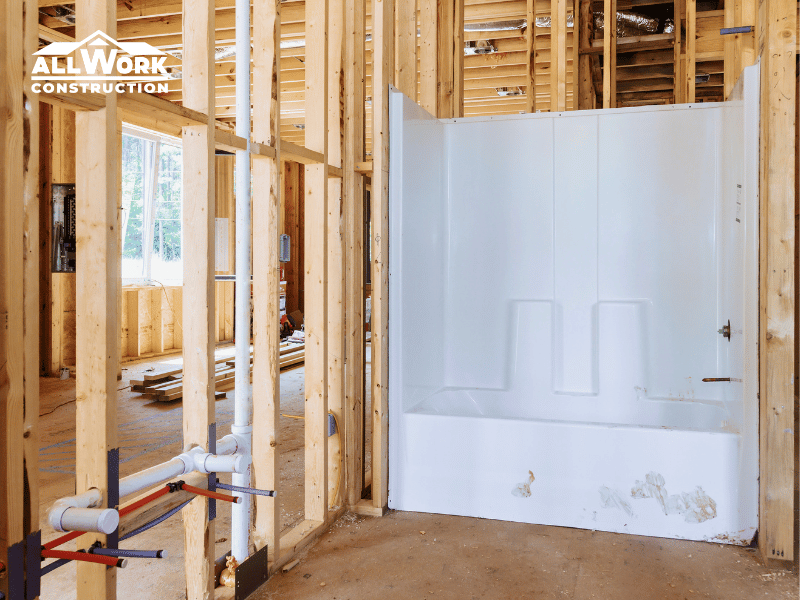
In many older homes, the bathtub dominates the layout.
It takes up wall space, limits placement options, and often feels larger than necessary for how it’s actually used.
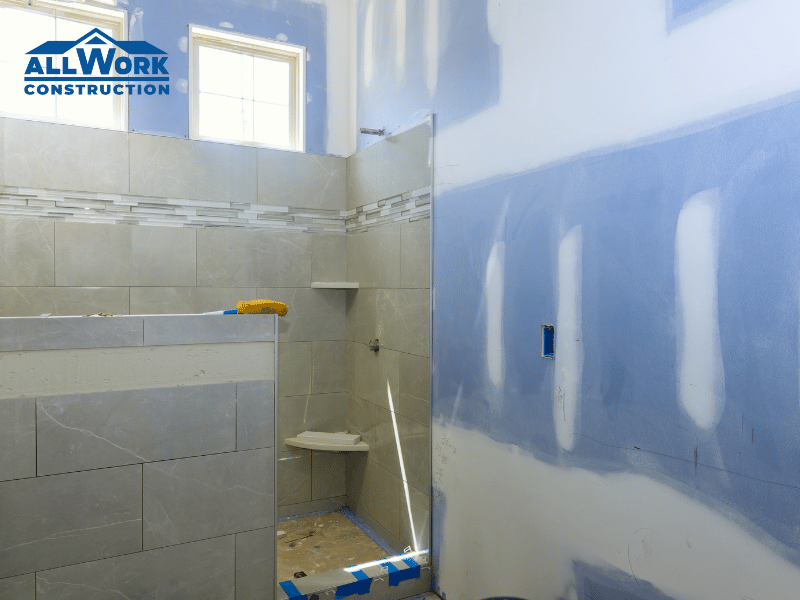
Switching to a walk-in shower does more than free up square footage.
It changes how the entire room works.
Movement becomes easier. Sightlines open up. The space feels less boxed in.
That’s one reason this approach shows up often in bathroom remodeling in Tewksbury, MA, where homeowners are trying to make smaller bathrooms feel more usable without expanding them.
Vanities Don’t Need to Be the Centerpiece
Traditional vanities tend to be bulky.
They sit heavily on the floor, take up visual space, and limit how the rest of the room can be arranged.
Smaller or wall-mounted vanities create a different effect.
They open up the floor, which makes the room feel lighter. Even when the actual size doesn’t change, the perception does.
In tighter layouts, like those seen in bathroom remodel in Wilmington, MA, this shift alone can make the room feel noticeably less cramped.
Small Fixture Adjustments Can Fix Bigger Problems
Not every layout needs to be redesigned.
Sometimes, moving a fixture slightly changes how everything connects.
A few inches in the right direction can open up movement paths, improve spacing, and remove awkward transitions.
This is especially useful in homes where the layout is close to functional but not quite there.
You’ll often see this kind of refinement in bathroom remodeling in Stoneham, MA, where the structure limits major changes but allows subtle improvements.
Storage Should Disappear Into the Room
Adding storage to a small bathroom can easily make it feel smaller.
That’s the common mistake.
The better approach is to integrate storage instead of placing it.
Recessed shelving, wall niches, and built-in compartments use space that already exists within the structure.
They don’t take away from movement or make the room feel crowded.
Instead, they quietly solve the problem without adding visual weight.
Doors Are More Important Than They Seem
In a larger room, a door is just a door.
In a small bathroom, it becomes part of the layout.
An inward-swinging door can block access, limit fixture placement, and create unnecessary friction.
Changing how the door works, or even replacing it with a sliding option, can free up usable space immediately.
It’s a small detail, but one that has a real impact on daily use.
Visual Simplicity Helps the Space Breathe
Not every improvement requires construction.
Some changes are visual.
Fewer transitions between materials. Larger tile formats. Consistent color tones.
These don’t make the room physically larger, but they reduce visual clutter.
When the eye doesn’t have to process too many breaks or contrasts, the space feels calmer and more open.
That effect is subtle, but it changes how the bathroom is experienced.
Why Adding More Isn’t Always the Answer
There’s a natural instinct to improve a space by adding to it.
More storage, more features. More functionality.
In small bathrooms, that approach often works against you.
The room becomes crowded. Movement becomes tighter.
A better approach is selective improvement.
Keep what works. Remove what doesn’t. Avoid adding elements that don’t serve a clear purpose.
That’s what creates balance.
Older Homes Come With Built-In Limitations
One of the reasons remodeling in New England feels different is because the structure itself sets boundaries.
Plumbing locations aren’t always flexible. Walls may carry structural roles. Floor levels might not be perfectly aligned.
These factors limit what can be changed.
That’s why successful remodels in this region don’t try to force dramatic redesigns.
They work within the structure and improve what’s realistically possible.
Teams like All Work Construction focus on identifying those opportunities early, which keeps the project grounded and avoids unnecessary complications.
The Goal Isn’t More Space. It’s Better Use of Space
A small bathroom doesn’t need to become large to feel functional.
It needs to feel natural.
You should be able to move without thinking about it. Use the space without adjusting your routine.
That’s what makes a remodel successful.
Not the size of the room, but how easily it works.
What Homeowners Notice After the Remodel
Once everything is complete, the difference isn’t always visual at first.
It’s practical.
You move more easily. You reach things without effort. The space feels organized without trying to be.
That’s when the improvements become clear.
Not because something dramatic changed, but because the friction is gone.
When the Layout Finally Makes Sense
There’s a point in a well-designed bathroom where everything feels aligned.
Nothing is in the way. Nothing feels forced.
The layout supports how the space is used instead of working against it.
That’s the moment when a small bathroom stops feeling small.
Final Thoughts: Small Changes, Real Impact
Older New England bathrooms don’t need to be completely reimagined to feel better.
They need thoughtful adjustments.
A better layout. Smarter storage. Fewer obstacles.
Once those pieces come together, the space starts to work in a way it never did before.
And that’s what most homeowners are actually looking for.
Not a bigger bathroom.
Just one that finally makes sense.